
EYE EXAMS PORTLAND OREGON
921 SW 16th Ave, Portland, OR
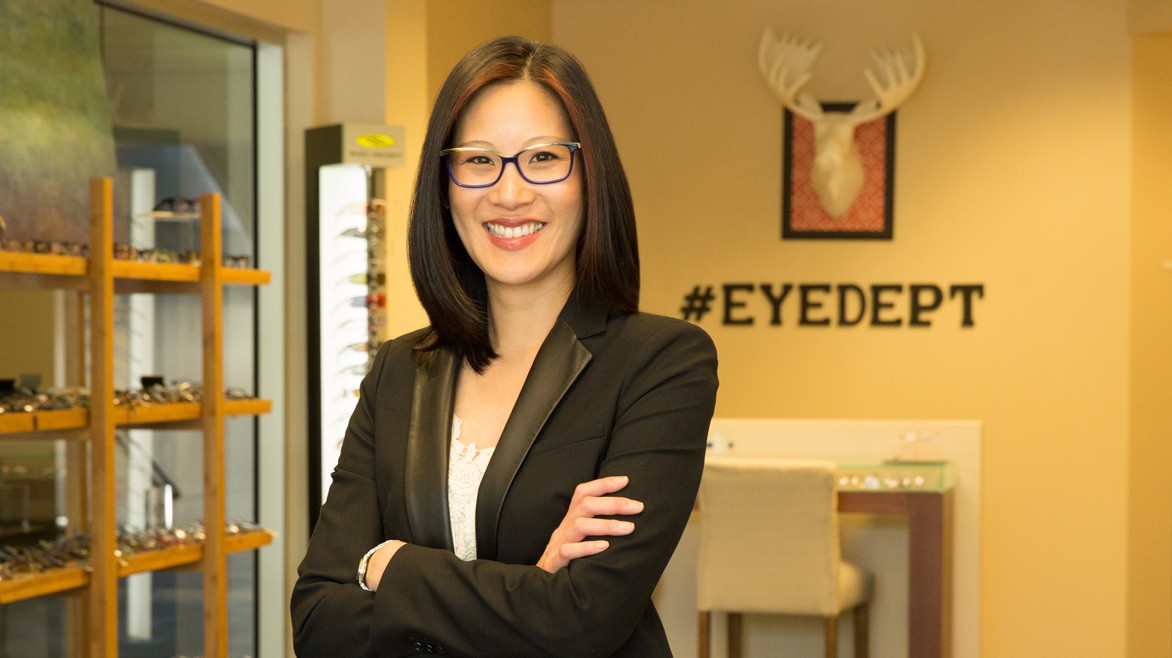
Comprehensive Eye Exams & Medical Eye Care in Portland, Oregon
Eye Exams at Eye Department provide a more elevated approach to eye care by combining advanced diagnostic technology with personalized, patient-centered service. As a premier optometry and eyewear boutique in Portland, we offer comprehensive eye exams, contact lens evaluations, curated eyewear, and medical eye care, including urgent visits when needed.
With over a decade of experience serving the Portland community, Dr. Annie Bacon has built a reputation for delivering thoughtful, thorough, and individualized care. Every patient is unique, and your eye care experience should reflect that.
More Than a Vision Screening
Clear vision is only one part of your overall eye health. A quick screening at school or the DMV cannot detect many of the conditions that develop silently and without symptoms. Comprehensive eye exams at Eye Department are a full medical evaluation of your vision and eye health. Using advanced digital pre-testing, we can detect early signs of progressive myopia, early onset presbyopia and conditions like glaucoma, diabetic eye disease, and macular degeneration, often before symptoms appear. Annual exams are essential for protecting your long-term vision by detecting and treating vision concerns early when they are most treatable.
A Window Into Your Overall Health
Your eyes provide a unique view into your overall health. During your exam, we carefully evaluate for early signs of:
- Progressive Myopia
- Dry Eye and Ocular Surface Disease
- Glaucoma
- Diabetic eye disease
- Macular degeneration
- Cataracts
- Other systemic health conditions
Many of these conditions can be detected in the eyes before symptoms appear elsewhere in the body, making annual eye exams an important part of preventative healthcare.
Personalized, Comprehensive Care
At Eye Department, we take the time to understand your vision, your health, and your concerns. Our eyeballs were not prepared for 11 hours of screen use per day. Eye exams in SW Portland elevated at Eye Department for the modern patient experience. Our goal is not just to help you see clearly today but to help you maintain healthy vision for life. Eye Department has no-puff-of-air test technology. We utilize the latest intraocular pressure (IOP) testing equipment that dramatically improves patient experiences.
We proudly serve SW Portland, NW Portland, NE Portland and surrounding neighborhoods including the Pearl District, NW PDX, Uptown, Goose Hollow, Downtown Portland, Hillsdale, and nearby areas. Our services include Emergency Eye Care, Eye Exams, Glasses, Contact Lenses, Progressive Myopia Management, Diabetic Eye Care, Senior & Medicare Eye Care, and Family Optometry.
Comprehensive eye exams including intake, pre-testing and diagnostic imaging at Eye Department generally last 30-40 minutes. Eye Department eye exams include screenings for diabetes, glaucoma, macular degeneration, cataract and other systemic conditions that can be seen in your eyes earlier than anywhere else in your body. We use the latest no-puff-of-air IOP testing. While dilation may not always be the most convenient for going back to work, dilation is important to the eye examination process and provides Dr. Annie with the best opportunity to provide the best eye care and that you deserve. If you are concerned about driving or working while dilated, please be prepared to have a friend, colleague, partner or family member drive you to your appointment.
To replace the clouded human lens, a precisely engineered artificial lens called the intraocular lens, or “IOL”, is implanted into the eye at the time of cataract surgery. Unlike a contact lens, it is permanently fixated inside the eye. In this way, it cannot fall out, does not require cleaning, and does not change the appearance of the eye. It produces no sensation, and cannot be felt by the patient. The IOL is permanent because it is made of a perfectly transparent material that will never cloud. Once in place, it will not move, and unlike an artificial joint or heart valve, there are no moving parts in the lens that could wear out over time. Because it is lightweight and flexible, it will not be affected by physical activities or by rubbing of the eye. Patients can ultimately resume all of their normal activities without any restrictions.
Intraocular lenses replace three main functions of the natural human lens. First, like a window, both the cornea and the lens must be perfectly transparent in order for external light and images to be focused onto the retina at the back of the eyeball’s interior. Second, the lens acts as a structural partition between the vitreous gel behind it, and the clear fluid-filled chamber in front of it. Finally, it provides necessary focusing power.
Every other IOL comes in a fixed range of powers, and preoperative calculations are performed to assist the surgeon in estimating the lens power to use for your eye. Preoperative eye measurements are plugged into several IOL formulas, which estimate the IOL that is most likely to hit the target that you select with your cataract surgeon. As you might expect, these prediction formulas are not perfectly accurate for every patient because of individual differences in eye anatomy and healing.
Certain factors may make IOL power selection much less accurate, such as a history of prior refractive surgery like LASIK, PRK, or RK (radial keratotomy). Others are born with an unusually flat or steep cornea. An adjustable IOL may be especially beneficial for these situations. Those who want some degree of monovision—using one eye for distance and the other for near—will enjoy the precision of the LAL because of its ability to fine tune each eye for its optimal target.
How does the light adjustable lens work?
The LAL contains molecules that are light-sensitive. Their distribution and position can be adjusted by an external UV light beam, which alters the shape of the IOL without requiring additional surgery. As the shape of the IOL changes, its power changes, which can adjust for astigmatism, nearsightedness, or farsightedness. We provide special UV blocking sunglasses for you to wear temporarily to protect the IOL from receiving too much UV light until the adjustment process is complete.
The postoperative adjustments are painless and take less than 2 minutes. They are performed in our office, where we use a light delivery device to send the beam that reshapes the IOL. The first customized treatment is typically performed several weeks after the cataract surgery when the vision has stabilized. Additional adjustments are performed at approximately weekly intervals as determined by the doctor. It is possible to make up to 3 adjustments, although some eyes require only one. When the result has been optimized, 2 final “lock-in” treatments are performed, after which the IOL can no longer change or be adjusted. After lock-in, no extra protection is needed for sunlight or UV light; there is no need for any other special precautions or follow-up . Because the LAL is adjustable postoperatively, many patients elect to have both eyes operated on at the same time (or a few days apart) with this option.
 BABY where she offers complimentary diagnostic vision screenings to babies to two year olds in the community. It is vital to ensure babies are developing proper visual acuity. It is during these formative years where Dr. Annie can provide early detection analysis and screenings. These events are held on several dates throughout the year, however, space is limited. Please contact Eye Department at 503-227-0573 for details and event booking.
Presbyopia is the gradual loss of your eyes’ ability to focus on nearby objects. It’s a natural, often annoying part of aging. Presbyopia usually becomes noticeable in your early to mid-40s and continues to worsen until around age 65.
You may become aware of presbyopia when you start holding books and newspapers at arm’s length to be able to read them. A comprehensive eye exam at Eye Department can confirm presbyopia. You can correct the condition with eyeglasses or contact lenses.
Presbyopia develops gradually. You may first notice these signs and symptoms after age 40:
- A tendency to hold reading material farther away to make the letters clearer
- Blurred vision at normal reading distance
- Eyestrain or headaches after reading or doing close-up work
You may notice these symptoms are worse if you are tired or are in an area with dim lighting. If you notice any of these symptoms, call 503-227-0573 or schedule online: Schedule Eye Exam @ Eye Department
Eye health is one of the biggest concerns for people with diabetes. Over time, a continuously high blood sugar level damages the tiny blood vessels in the retina. Diabetic eye disease describes a group of eye conditions that can develop in people with diabetes. The most common health issues affecting the vision of diabetics include: diabetic retinopathy, diabetic macular edema, cataracts & glaucoma.
Many eye and vision problems have no obvious signs or symptoms, so you might not know a problem exists. Early diagnosis and treatment of eye and vision problems can help prevent vision loss. Each patient’s signs and symptoms, along with your doctor of optometry’s professional judgment, will determine what tests are conducted. School age children and young adults are spending longer and longer time periods in close-up near work. The stress on our eyes, often from near work on laptops and tablets, is greater today than in any other time in history. Annual comprehensive eye exams at Eye Department are critical to ensuring a lifetime of great vision. The extent to which a child is at risk for the development of eye and vision problems determines the appropriate re-evaluation schedule. Children with ocular signs and symptoms require a prompt, comprehensive examination. As we age, our eyes go through a tremendous amount of force and stress. This stress can cause problems. Rest assured, Dr. Annie Bacon and the team at Eye Department are ready to see you.
The presence of certain risk factors may necessitate more frequent examinations based on professional judgment.
Adult patients at risk include those:
- A personal or family history of ocular disease.
- History of eye injury.
- Years of close-up near reading on laptops, phones and tablets.
- Systemic health conditions with potential ocular manifestations.
- Occupations that are highly demanding visually or have a high potential of being hazardous to the eyes.
- Taking prescription or nonprescription drugs with ocular side effects.
- Functional vision in only one eye.
- Wearing contact lenses.
- Eye surgery or previous eye injury.
- High or progressive refractive error.
- Other eye-related health concerns or conditions.
Patients who have undergone refractive surgery (LASIK, PRK, SMILE) should still have an eye exam every 1-2 years for monitoring of overall ocular health.
Protect Your Vision with Advanced, Personalized Eye Care
Your vision and eye health are constantly changing. Regular, comprehensive eye exams allow us to detect subtle changes early and help prevent more serious problems over time.
At Eye Department, we combine our decades of experience with advanced diagnostic technology and a patient first approach to deliver a more precise and personalized experience. Our exams evaluate not only your prescription, but also screen for early signs of conditions such as progressive myopia, early onset presbyopia, flashes & floaters, glaucoma, diabetic eye disease, macular degeneration, and cataracts often before symptoms appear.
Care That Puts You First
We believe exceptional eye care should be:
- Thorough – Comprehensive evaluation of your vision and eye health
- Comfortable – Modern testing designed with your experience in mind
- Personalized – Care tailored to your unique needs and concerns
Whether you’re coming in for a routine exam or a specific concern, our goal is to help you maintain clear, comfortable vision for life.
Now Accepting New Patients in Portland
We welcome new patients and work with most insurance plans. If you have questions about your coverage, our team is happy to help guide you.
Schedule Your Eye Exam Today
Experience a more modern, comfortable approach to eye care.
Call 503-227-0573 or book your appointment online.