Best Contact Lenses For Dry Eyes 2026
The Most Comfortable Contact Lenses for Dry Eyes in 2026
What are the best contact lenses for dry eyes in 2026? Compare contact lenses BAUSCH & LOMB INFUSE, ALCON DAILIES TOTAL1, and specialty lenses EUCLID BEFREE to find the best option for all-day comfort and clearer vision. Please be aware that the daily contact lenses discussed in this comparison article are premium options and widely considered to be best in class. These daily lenses are worn by our Optometrists and Opticians and have become household favorites for patients of Eye Department.
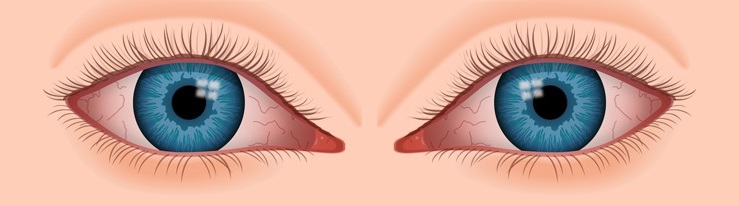
Dry eye is a common condition where your eyes don’t produce enough tears—or the right quality of tears—to stay comfortable.
Your tears aren’t just water. They’re made of three layers:
- Oil
- Water
- Mucus
These work together to keep your eyes:
- Smooth
- Clear
- Comfortable
When that balance is off, your eyes can feel:
- Dry
- Gritty
- Burning
- Or even watery
Yes—watery eyes can actually be a sign of dry eye.
Dry eye becomes more common with age, screen use, and certain medical conditions but the good news is, it’s very treatable once properly diagnosed.
What Causes Dry Eyes with Contact Lenses?
Contact lenses don’t just sit on the eye, they interact constantly with your tear film, eyelids, and ocular surface. Dryness occurs when that system becomes unstable.
The Tear Film Gets Disrupted
Your eye’s surface is protected by a very thin, complex layer called the tear film, made of three layers:
- Oil (lipid layer)
- Water (aqueous layer)
- Mucin (helps tears stick to the eye)
A contact lens essentially splits this tear film into two layers:
- One layer in front of the lens
- One layer behind it
👉 This makes the tear film less stable and more prone to evaporation, especially late in the day.
Increased Tear Evaporation
When the tear film is disrupted, moisture evaporates faster leading to dry eye disease symptoms like:
- Burning
- Grittiness
- Fluctuating vision
Some contact lens materials are more prone to dehydration, which accelerates this process.
Reduced Oxygen to the Eye
Your cornea doesn’t have blood vessels—it gets oxygen directly from the air.
Contact lenses act as a barrier, and if the material isn’t highly breathable, it can lead to:
- Mild hypoxia
- Redness
- Inflammation
👉 Modern silicone hydrogel lenses improve this, but oxygen alone doesn’t solve dryness—it’s just one piece.
Friction Between the Lens and Eyelid
Every time you blink, your eyelid moves across the surface of the lens.
If the lens:
- Dries out
- Has a rougher surface
- Loses wettability
…it increases friction, which can cause:
- Irritation
- Awareness of the lens
- End-of-day discomfort
👉 This is why newer lenses focus heavily on surface smoothness and water gradient technology.
Meibomian Gland Dysfunction (MGD)
The oil layer of your tear film is produced by glands in your eyelids called the Meibomian glands.
If these glands are blocked or not functioning properly:
- Tears evaporate too quickly
- Contact lenses feel dry much faster
👉 This is one of the most common underlying causes of contact lens intolerance.
Incomplete Blinking (Especially with Screens)
When using phones or computers, studies show patients:
- Blink rate decreases
- Blinks become incomplete
This leads to:
- Uneven tear distribution
- Dry spots on the lens surface
👉 This is a major reason patients feel fine in the morning but uncomfortable later.
Lens Material & Water Content
Not all contact lenses behave the same material or design technology.
- High-water lenses can actually lose water faster
- Some materials attract deposits or dry out
- Others are designed to retain moisture or mimic natural tears
👉 The wrong material for your eye can significantly worsen dryness, even if the prescription is correct.
Deposits and Buildup (Especially Non-Daily Lenses)
With reusable lenses:
- Protein
- Lipids
- Debris
…build up over time.
This can:
- Reduce wettability
- Increase irritation
- Trigger inflammation
👉 This is why we recommend daily disposable lenses as they are more often better for dry eyes.
Underlying Dry Eye Disease
Sometimes, contact lenses aren’t the root cause; they just expose an existing problem.
Patients may already have:
- Tear deficiency
- Inflammation
- Ocular surface disease
Contact lenses may make symptoms more noticeable.
🧠 Key Takeaway
Contact lens dryness isn’t caused by just one factor—it’s usually a combination of tear film instability, evaporation, friction, and underlying eye health.
💡 Clinical Insight
Many patients assume:
“Contacts just don’t work for me.”
But in reality:
- The wrong lens type is often the issue
- Or an untreated dry eye condition
👉 With the right lens and proper evaluation, most patients can achieve comfortable, all-day wear.
Tear Film Instability
Leads to faster evaporation and irritation.
Screen Use
Reduced blinking increases dryness.
Lens Dehydration
Some materials lose moisture over time.
What to Look for in Dry Eye Contact Lenses
- Moisture retention for all-day comfort
- High oxygen flow for healthier eyes
- Smooth surface to reduce friction
- Daily replacement to prevent buildup
Best Contact Lenses for Dry Eyes in 2026
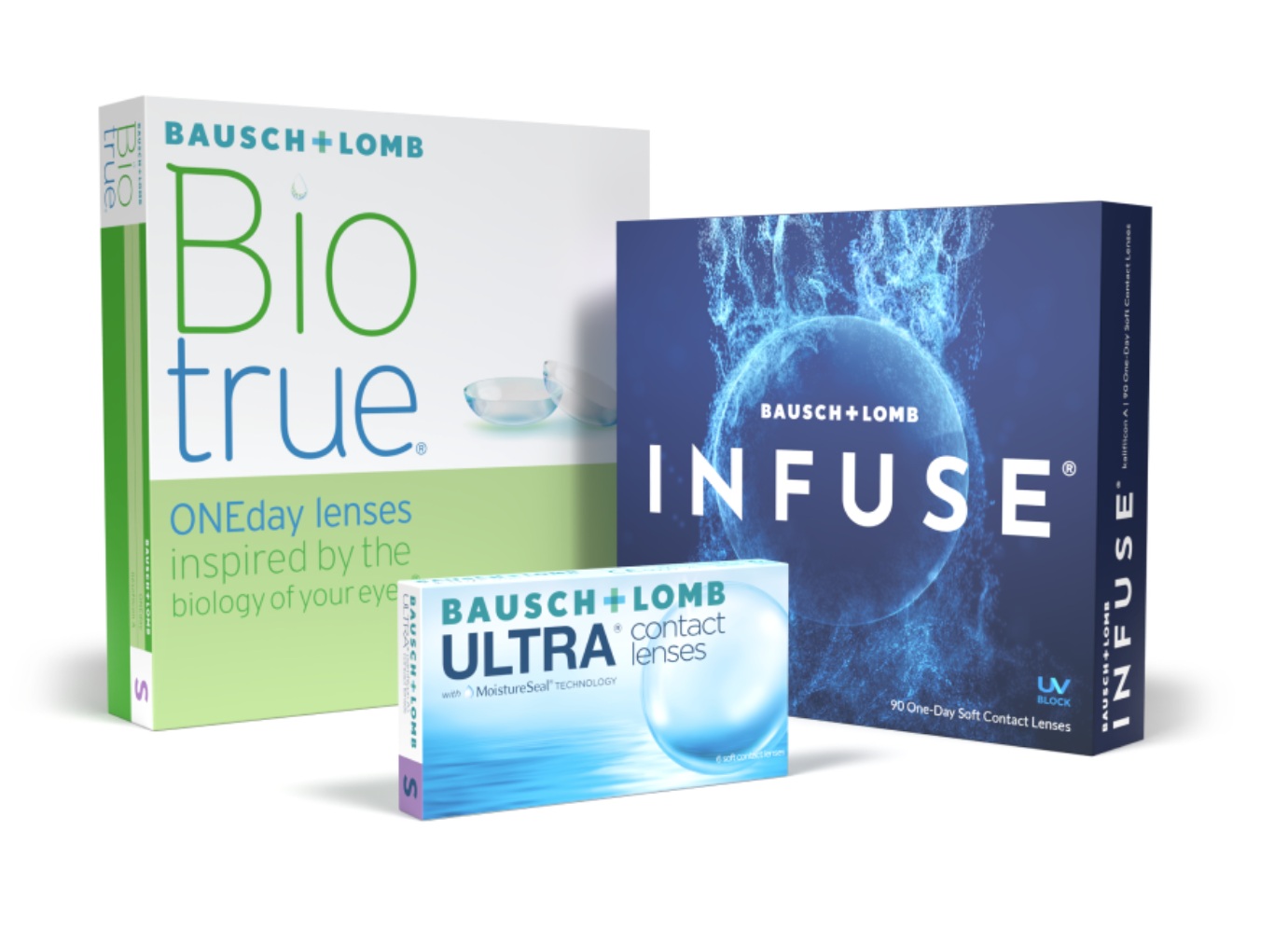
🥇 Bausch + Lomb INFUSE
Best for: Digital eye strain
- Designed to help minimize lens dryness with a unique combination of next-generation material and a blend of proprietary ingredients.
- Supports tear film balance
- Great for screen users
- Improves end-of-day comfort
🥈 DAILIES TOTAL1
Best for: Premium comfort
- The first and only daily disposable lenses with nearly 100% water at the surface
- Ultra-smooth surface
- Barely-there feel
🥉 Euclid BeFree
Best for: Severe dry eye
- A daily silicone hydrogel
- No daytime wear needed
- Ideal for specialty cases like progressive myopia management
- An excellent option for early presbyopia patients
BAUSCH & LOMB INFUSE
Comfort: ⭐⭐⭐⭐⭐
Best for: Screen users
ALCON DAILIES TOTAL1
Comfort: ⭐⭐⭐⭐⭐
Best for: Sensitive eyes
EUCLID BeFree
Comfort: ⭐⭐⭐⭐⭐+
Best for: Severe dry eye
Find Your Perfect Contact Lens
Comfortable vision is possible. Get a personalized contact lens fitting today.